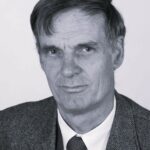
CEIPA 20.11.2025 Contribution of Andreas Halbach
I have been retired for a few years and have traded daily professional discourse and developments for a lot of other activities, incl. the armchair luxury of contemplating the world. With the result that I now know better that I know nothing. Since I have been invited to contribute a few words to this event allow me a few moments to expand on that nothing.
- Helga Konrad
As Liaison Mission, IOM Vienna cooperated a lot with the OSCE and I could witness Helga Konrad‘s determination and committment. She was diplomatic and at same time did not mince words, did not shy away from confronting participating states with uncomfortable truths, incl. the heavyweights amongst them.- After she left OSCE, we could also provide some informal initial support when she shaped her own platform.
H.K. remains an example and inspiration in the fight against TiP
Sharing some thoughts on: TiP – human rights – refugees, asylum and migration and their instrumentalization for political gains:
- TiP
TiP came into focus some 20 plus years ago and centered around the classical triple or quadruple Ps: Protection, Prosecution, Prevention, enhanced by Partnerships between countries of origin and destination and by cooperation between organizations.
The foremost and immediate concern remains protection of victims with the essential involvement of NGOs, to safeguard core human rights, to help victims earn a decent living.
Criminalization and prosecution are actually a specific form of prevention, locking up actual perpetrators and hoping that criminalization deters potential perpetrators; however, too much money is involved for prosecution to have overall significant impacts.
Protection and prosecution are very concrete points of intervention and visible impact is achievable – however, that is only after the damage has already been done.
Prevention, the third approach, remains complex and diffuse, but probably the most important task: prevent the damage from happening in the first place. Focus is not only on actual victims in destination countries, but on the potential victims in countries of origin. – Information campaigns are a good tool, but they also make migrants think, they now know the tricks and can avoid the risks. Potentially more effective prevention could be to identify the main recruiting pools and areas, invest development money and foster eocnomic prospects.
- Human Rights
From the first notions of rule of law to Habeas Corpus, from the anthropocentric focus oft the Renaissance to Enlightenment and to Liberté, Égalité, Fraternité, – over the ages human rights had to be wrested from the powers that were. With democracy and the two World Wars, their development accelerated, but got mired in the Cold War. With its end began the most productive phase with a plethora of conferences, conventions, legal instruments, rapporteurs and so on. It is probably safe to say, that core human rights have a claim to universal legitimacy across all cultures. Some other rights might have a different value in different cultures. But now the architecture as such is under siege: governments think of leaving the CoE, ignore the ECHR, flout international law, undermine civil rights, rule of law and core democratic principles. Moreover, this trend not only originates top down, but also bottom up – using the very same democratic institutions to undermine democracy. Russia, China and now even the USA, all the big guys are affected, or better infected. Human rights and their defenders become again more important than ever in recent history.
- Refugees and asylum
That leads up to adding a few observations regarding asylum and refugees. That some would think the Refugee Convention and the right to non-refoulment should be amended (if not junked) is absurd at a time when more and more persons are again persecuted for political and other reasons, – just like during the Cold War. The difference is that now it is not about competing ideologies, but about suppressing freedom, about authoritarianism, about imperial ambitions, about blunt power and corruption.
Regarding protection of refugees fleeing from war, challenges are bigger than ever. The EU Commissions’s Temporary Protection Directive was a good reponse. It was activated for the first time for Ukrainians. Similarly and on a national level, Chancellor Merkel‘s reaction to the Syrian refugee crisis was a courageous and deeply humanitarian gesture. Everyone remembers her iconic saying „We can do this – otherwise this country is not my country“. It was a rare example of a politician going out on a limb to lead society in tackling a huge challenge.
But overall, capacity and will of politicians and society to respond become more and more stretched.
- Migration
The UN Compact for Migration is the result of long-winded negotiations and sends a good signal. The Compact has no immediate impact, it is a reference for policy making. Policy making is difficult as shown by the herculean efforts of the EU to shape a common migration policy. Over 20 years ago, the Commission began to formulate some good ideas. A number of baby steps were taken. However, while the flows of goods, services and finances are quite manageable, the flow of persons is another story, because persons have their autonomous ideas on what to make of their lives. As they say, migration is the unfinished business of globalization. I would even like to suggest that migration ist to some extent unmanageable. It might therefore be helpful to identify seemingly unmanageable areas and focus instead on realistic goals. A major shortcoming of national and EU migration policy is the defensive reflex: irregular migration, border management, the fight against smuggling of persons dominate the agenda; partnerships with CoO are also on the agenda, but very often mean control of emigration and cooperation on return migration.
- Instrumentalization of migration
Migration challenges the concept of nation state and of national identity, a concept loaded with emotions. The EU Commission has a lot of reasonable ideas. But on the national level, governments and leaders lack courage and vision and instrumentalize migration for party and power. In Germany, they say Merkel’s open door for the Syrians in 2015 is responsible for the rise of the AfD; but if it hadn’t been for the Syrians, the AfD would have instrumentalized other issues, such as globalisation with the felt loss of control and other anxieties. However, xenophobia is a deep seated reflex, it readily resonates with large segments of society and yields easy political returns. It’s time for leaders to rationalize the migration discourse and to focus on the really big issues ahead, such as climate change, erosion of democracy, of the rule of law or of human rights. It’s time to promote civic engagement and mobilize resilience to face the challenges ahead and promote confidence in the future.
Wir schaffen das! Or as Obama said: Yes we can!
Today, however, it is not merely „Wir schaffen das“, but Wir müssen das schaffen, – it is not merely „Yes we can“, but Yes we must!